

If you've been running a small business for any length of time, you've probably heard the phrase "SEO is dead" more times than you can count. Every year, someone declares it finished. And every year, it keeps on mattering.
But here's the thing, 2026 feels different, doesn't it? With AI-powered search tools like ChatGPT, Google's AI Overviews, and a whole host of intelligent assistants changing how people find information, the question is worth asking again: does SEO actually still matter?
The short answer is yes. The longer answer is that it matters differently now. Let's break down what's really going on and what it means for your business.
The Big Shift: From Keywords to Trust
For years, SEO was essentially a game of keywords and backlinks. You found the right phrases, stuffed them into your content (hopefully not too obviously), built some links, and watched your rankings climb.
That approach still has its place, but it's no longer the whole picture.
Today, search engines, and the AI systems built on top of them, are far more sophisticated. They're not just looking for keyword matches. They're trying to understand who you are, what you know, and whether you can be trusted.
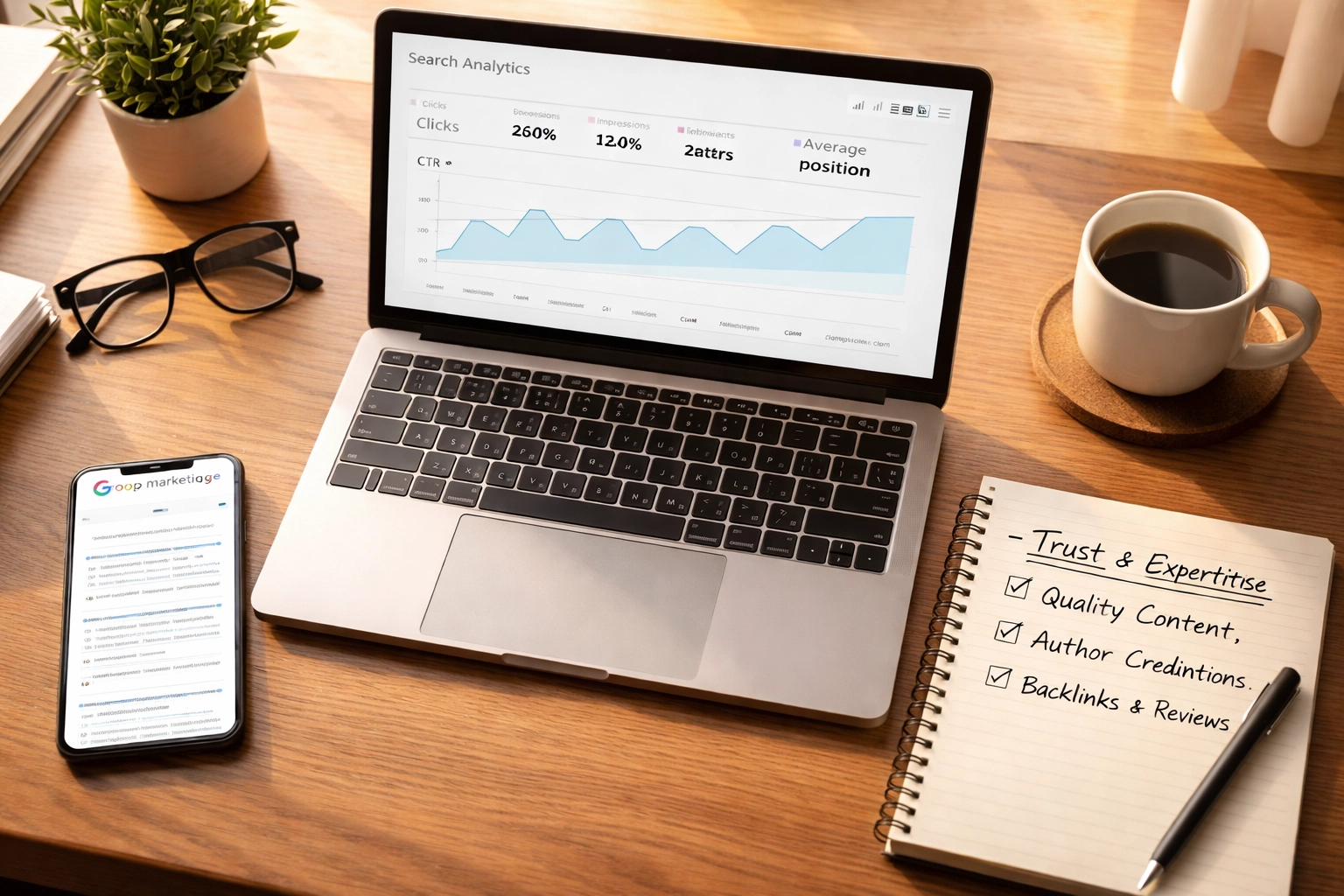
This is where EEAT comes in: Expertise, Experience, Authoritativeness, and Trustworthiness. Google has been banging on about this for a while now, but in 2026, it's become the single most important factor in how your content ranks.
What does that mean in practice? It means your content needs to demonstrate genuine knowledge. It means third-party validation, reviews, mentions in industry publications, podcast appearances, carries real weight. And it means AI systems are actively looking for signals that your brand is credible before they recommend you to users.
Why Organic Traffic Looks Different Now
Here's something you might have noticed if you've been keeping an eye on your analytics: organic traffic numbers are shifting.
Overall, organic traffic is declining for many websites. That sounds alarming, but there's an important nuance. The traffic that does arrive tends to be higher-intent and converts better.
Why? Because AI is consolidating answers directly into search results. When someone asks a simple informational question, they often get the answer right there, no click required. That's great for users, but it means fewer people are landing on your site for basic queries.
However, when someone does click through, they're usually further along in their decision-making process. They're not just browsing; they're ready to take action.
This fundamentally changes how you should think about SEO. It's no longer a volume game. It's an intent quality game. You want to attract the right visitors, not just more visitors.
AI Agents: The New Middlemen
One of the biggest changes in 2026 is the rise of AI agents, intelligent systems that search, compare, and even transact on behalf of users.
Think about it this way: instead of a potential customer typing a query into Google and clicking through results themselves, they might ask an AI assistant to find them the best local web design agency or compare SEO services in their area.
That AI agent then searches, evaluates, and presents options. Your website isn't just competing for human attention anymore, it's competing for AI attention too.
This means optimising for visibility and trustworthiness with AI systems is now as critical as traditional search rankings. Structured data, clear entity information, and consistent brand signals across the web all help AI systems understand who you are and what you offer.
If you're not showing up in AI-generated recommendations, you're missing out on a growing slice of potential business.

Brand Reputation Now Outweighs Keywords
Here's a shift that might feel uncomfortable if you've built your strategy around keyword research: brand reputation and entity clarity now outweigh traditional keyword tactics.
What does that mean? It means the strength of your brand, how recognisable it is, how trustworthy it appears, how often it gets mentioned positively, matters more than cramming the right phrases into your page titles.
Branded search (when people search specifically for your business name) has become more valuable than non-brand search. Why? Because branded searches signal trust. They indicate that someone already knows about you and wants to find you specifically. AI systems favour this kind of intent because it correlates with higher conversion rates.
So building brand awareness through marketing, excellent customer service, and genuine expertise isn't just good business practice, it's good SEO practice too.
Search Is Fragmenting Across Channels
Another reality of 2026: search isn't just Google anymore.
People discover businesses through YouTube, TikTok, LinkedIn, industry forums, Reddit, and AI platforms like ChatGPT. Your potential customers might find you through a video recommendation, a social media post, or an AI-generated answer that cites your content.
This means SEO success now requires multichannel visibility. You need to be ranking on Google, yes, but you also need to appear in AI answers, get cited on YouTube, and maintain a presence on relevant social platforms.
It sounds like more work: and honestly, it is. But it also means more opportunities to reach your audience where they already spend their time.
How to Adapt Your SEO Strategy
So what should you actually do with all this information? Here are the practical steps that matter most in 2026:
1. Build a Stronger Brand Foundation
Everything else is built on top of your brand reputation. Focus on delivering excellent products or services, collecting positive reviews, and getting mentioned in relevant industry contexts. This isn't just marketing fluff: it directly impacts your search visibility.
2. Create Integrated Content Strategies
Stop thinking of SEO as a separate, backend function. It needs to integrate with your PR efforts, your social media strategy, your product development, and your overall marketing plan. Content should serve multiple purposes and appear across multiple channels.
3. Optimise for Search Intent with Precision
Match your content type to what users actually need. Someone searching for "best web design agency in Newcastle" wants something different from someone searching for "how to improve website loading speed." Create content that precisely matches the intent behind each query.
4. Focus on Semantic SEO and Topic Clusters
Build content ecosystems that help AI systems understand your expertise. This means creating interconnected pieces of content around related topics, using structured data, and establishing clear entity relationships. If you specialise in local SEO, for example, you should have multiple pieces of content that demonstrate deep knowledge in that area.
5. Shift Your Metrics
Stop obsessing over keyword rankings as your primary measure of success. Track conversion impact, user behaviour, and business-relevant KPIs instead. A page that ranks fifth but converts brilliantly is more valuable than a page that ranks first but generates no leads.
The Bottom Line
SEO hasn't died. But the definition has expanded dramatically.
The brands winning in 2026 are those willing to adapt beyond traditional tactics. They're integrating SEO with overall brand building, prioritising content quality over content volume, and focusing on delivering authentic value to customers.
If you're a small business owner feeling overwhelmed by all this change, you're not alone. The landscape is genuinely more complex than it was five years ago. But the fundamentals remain the same: be helpful, be trustworthy, and make it easy for people (and AI systems) to find you.
Need a hand navigating the new world of SEO and AI search? Get in touch with Digital WebWorx and let's have a chat about how to future-proof your online presence.